- Stories From the Heart of The Piney Woods
- Posts
- Sometimes Help Hurts


In partnership with

Sometimes help hurts.
I didn’t understand that as a child. Back then, I thought poverty meant having nothing, no food in the pantry, no shoes that fit, no lights glowing in the windows at night. I thought it looked like emptiness. Like absence.
But poverty doesn’t always arrive empty-handed.
Sometimes it shows up in a grocery cart.
My momma was a single parent, which meant she carried everything, bills, worry, decisions, like a sack permanently slung over one shoulder. We went to the same grocery store every time. The fluorescent lights hummed overhead. The cart wheels squeaked no matter how many times she tried to straighten them. The air smelled like produce and floor cleaner and something sharp I could never name.
I watched other people pull out cash. Checks. Credit cards.
My momma pulled out food stamps.
I didn’t know the word dignity then.
I just knew my face burned with embarrassment.
I stared at the conveyor belt, watching cans and boxes inch forward, praying the cashier wouldn’t say anything. Sometimes they did. Sometimes they didn’t. Either way, it felt like everyone in line could see straight through us, past the groceries, past the cart, into the thing we were trying so hard to survive.
One question looped in my young mind, relentless and unfair:
Why can’t she just pay for it?
I never asked it out loud. But shame has a way of showing itself anyway. One day, my momma noticed. She always noticed before anyone else did.
We were outside, the sun glaring down, grocery bags rustling as she loaded them into the car. She paused, turned, and asked me softly, but straight on, no escaping it:
“Are you ashamed?”
I told the truth.
“Yes.”
Her face didn’t harden. It fell. Not angry. Not sharp. Just tired. The kind of tired that comes from holding too much for too long.
Then she said, “How do you think I feel? I can’t even feed my own kids.”
She turned back to the car after that. Conversation over.
But something inside me split open.
At the time, I thought the shame belonged to us, to her, to me.
I didn’t yet understand that shame had been placed on her long before we ever reached that checkout line. I didn’t know she wasn’t failing, she was surviving. That accepting help wasn’t weakness; it was devotion in its rawest form.
What I know now is this:
Poverty isn’t just about going without.
It’s about standing at a counter, doing the best you can, and still feeling like it isn’t enough. It’s about loving your children so fiercely that you’ll swallow pride, endure stares, and accept help that hurts, because hunger hurts worse.
And sometimes, what struggling families need most isn’t food or money at all.
It’s easy to write a check. Easy to drop something off and walk away feeling generous. But generosity that doesn’t linger, doesn’t listen, can still leave people alone inside their struggle.
What would have changed things for my momma wasn’t just groceries. It was someone willing to sit at the table, papers spread out, and say, Let’s figure this out together.
Someone who taught instead of rescued. Someone who asked, How are you really doing? Staying long enough to hear the answer.
Kindness is time.
And time is the most expensive thing we can give.
To this day, I carry that lesson with me.
When I stop at a traffic light and see someone standing there, sun beating down, cardboard sign curled and soft from being handled too much, I don’t look away. I notice the dust on their shoes. The way their shoulders brace when cars slow, then speed past.
If I have money on me, I give it.
If I don’t, I give something else.
I roll down the window. The heat rushes in. The noise. The moment.
I look them in the eye.
I smile, a big, honest smile. The kind that says I see you.
And I say hello.
Sometimes I tell them, quietly but clearly, “You are not a failure.”
“You’re surviving a hard season.”
“This moment doesn’t get to define you.”
I don’t know their whole story.
But I know what it feels like to be reduced to a moment. To be seen as a problem instead of a person.
I know how much it matters when help comes with dignity.
When kindness stays human.
Maybe the money helps.
Maybe it doesn’t.
But I’ve learned that what feeds a person most isn’t always what’s in your hand, it’s what you’re willing to offer with your presence. With your voice. With your time.
Because poverty isn’t just the absence of resources.
It’s the absence of being seen.
My momma didn’t need pity.
She needed partnership.
She needed compassion that didn’t carry shame.
I didn’t know it then.
But now I do.
A Reflection: When Help Hurts, What Actually Heals?
Most of us want to help.
We give money.
We donate goods.
We write checks and move on, hoping we’ve done our part.
And sometimes, that matters.
But there’s a quieter truth many people never consider:
Help can still hurt if it costs someone their dignity.
When support arrives without listening…
When help feels rushed or transactional…
When it solves a moment but ignores the story behind it…
The need might be met, but the person can still feel unseen.
What if kindness looked different?
What if helping meant staying long enough to ask,
How are you really doing?
And listening without trying to fix everything.
What if generosity included time, not just money?
What if dignity mattered as much as provision?
Because sometimes people don’t need rescuing.
They need partnership.
They need respect.
They need to know shame doesn’t get the final word.
You don’t have to save anyone.
You don’t have to solve poverty.
But you can offer presence.
You can offer compassion.
You can remind someone, through eye contact, a smile, a few honest words, that they are not a failure.
Sometimes help hurts.
But kindness…real, patient, dignity-restoring kindness…has the power to heal.
Why is everyone launching a newsletter?
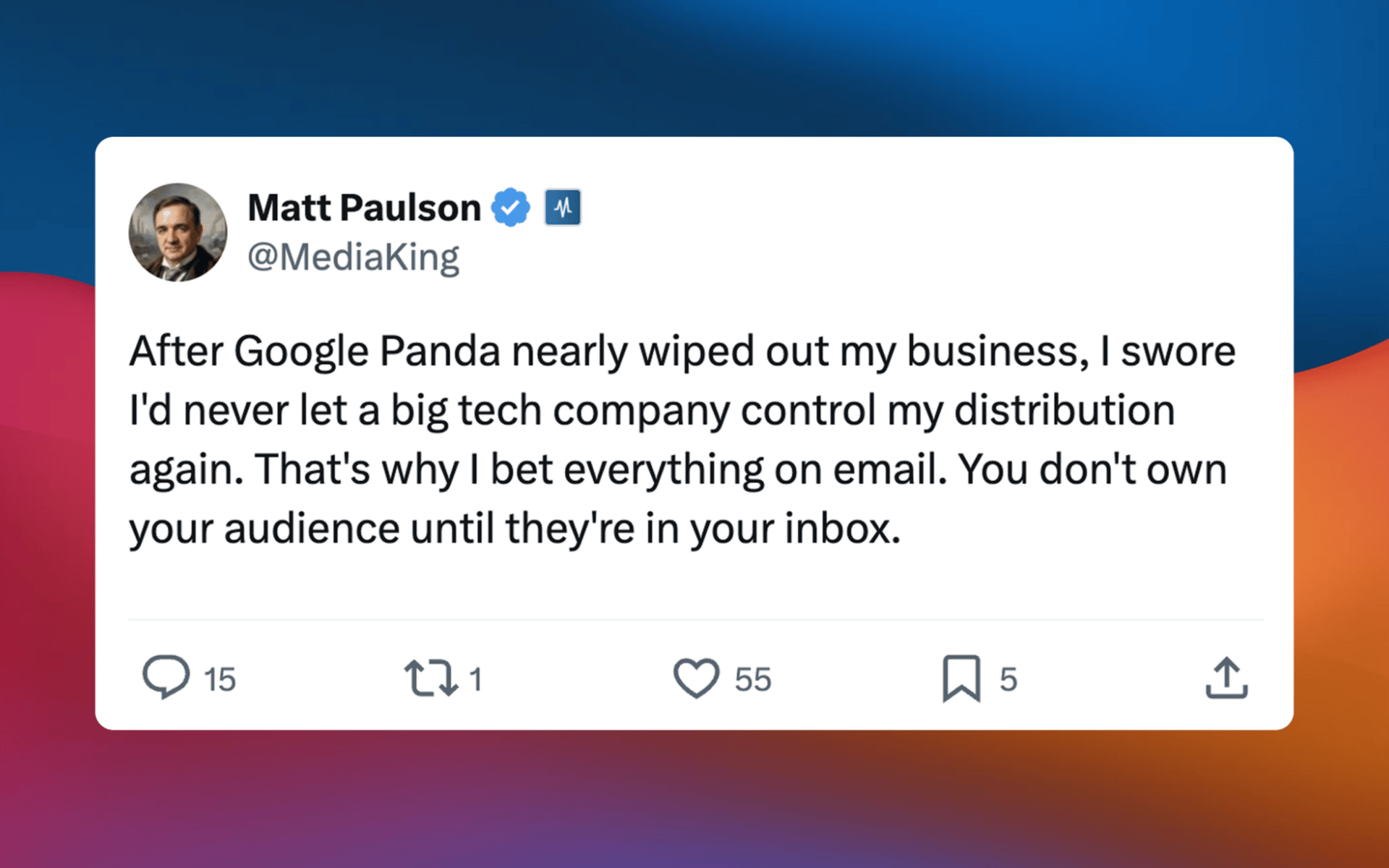
Because it’s how creators turn attention into an owned audience, and an audience into a real, compounding business.
The smartest creators aren’t chasing followers. They’re building lists. And they’re building them on beehiiv, where growth, monetization, and ownership are built in from day one.
If you’re serious about turning what you know into something you own, there’s no better place to start. Find out why the fastest-growing newsletters choose beehiiv.
And for a limited time, take advantage of 30% off your first 3 months with code LIST30.